
ZEC Is Not Money
A Personal Perspective on Freedom, Privacy, and Monetary Dominance

My Journey into Crypto and the Quest for Sovereignty
When I first entered the cryptocurrency space, I did so with starry-eyed optimism, believing this technology could fundamentally constrain government overspending and empower individuals to hold money beyond the reach of legal authorities. It represented a form of exit, a way for the weak to preserve dignity and rights against the strong. This resonated deeply with me as a descendant of immigrants who fled Armenia in the early 20th century amid genocide and upheaval. Governments, I believed, were spiraling into unchecked fiscal excess, debasing fiat currencies and eroding personal freedoms. Crypto seemed like a weapon for the marginalized, a digital haven where value could be stored and transferred without permission or oversight.
However, my idealism soon collided with reality. I learned about on-chain analytics: even if a wallet lacks a direct name attached, funds can be traced through the public ledger, de-anonymizing users via transaction patterns, exchange data, and network analysis. While you can move money on-chain without explicit permission from the powerful, you’re still visible to them. This revelation fostered a lasting affinity for privacy solutions, from Tornado Cash and Monero (XMR) to Zcash (ZEC), Secret Network, and beyond. I’ve always held a warm spot in my heart for these tools, recognizing their role in restoring true sovereignty.
All of this underscores my conviction: on-chain privacy will become increasingly valuable in the future, especially as global surveillance intensifies in 2026 with trends like CBDCs and regulatory crackdowns. I’ve valued privacy for years, but it’s crucial to distinguish between its utility and the overhyped narratives surrounding tokens like ZEC.
Zcash and Its Current Narrative
Zcash is a proof-of-work blockchain similar to Bitcoin, but with a key innovation: users can natively shield their tokens, moving them into privacy pools where transactions occur with minimal information revealed to third parties. Using zero-knowledge proofs, ZEC enables transfers that are nearly impossible to track when done correctly. This is a remarkable feat, one that Bitcoin might have benefited from if implemented from the start. Shielded transactions obscure amounts, senders, and receivers, providing a level of privacy that transparent chains like BTC inherently lack.
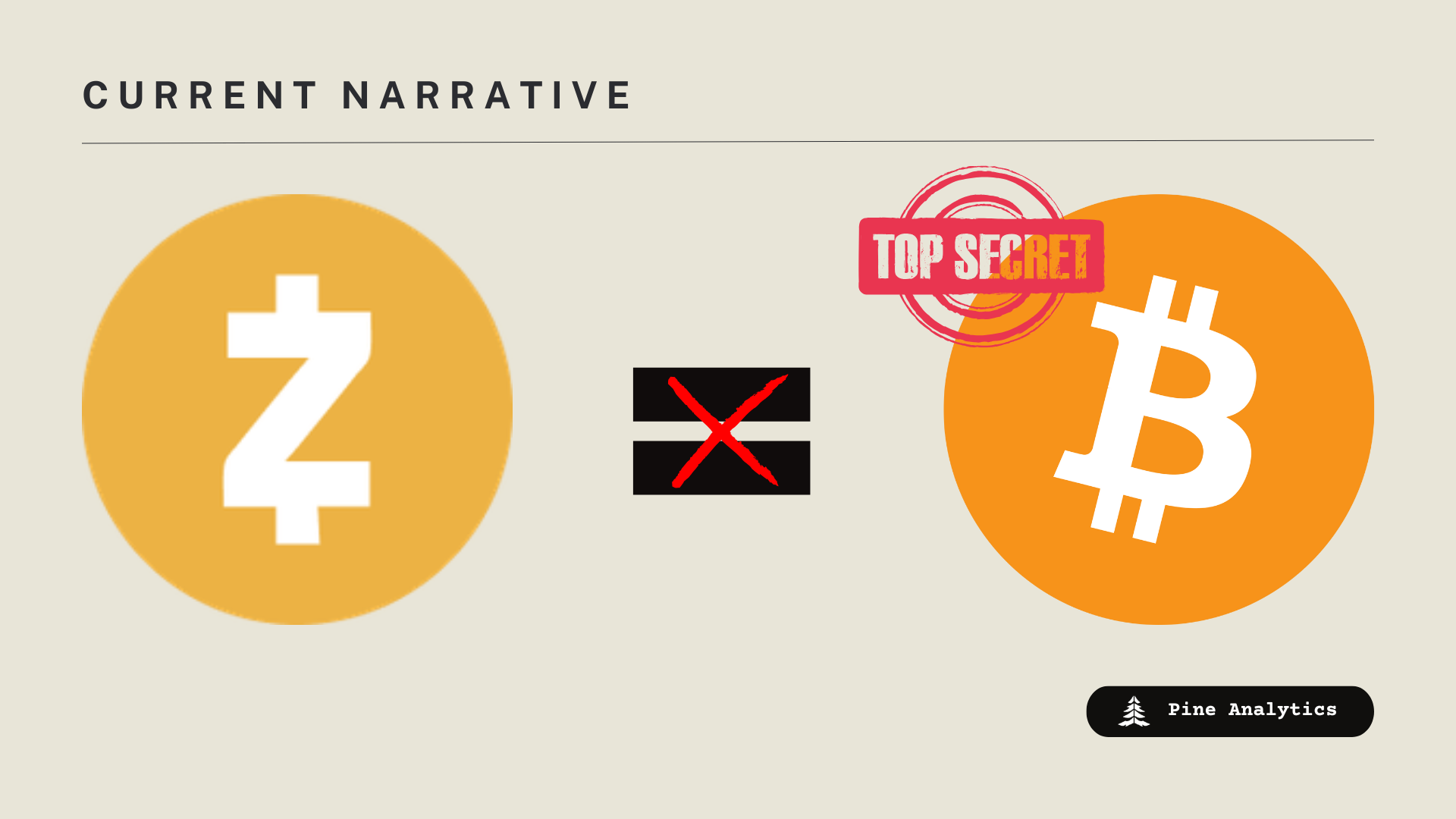
Yet the current narrative driving ZEC’s premium (evident in its 661% year-to-date gains in 2025 and ongoing buzz into 2026) is that it’s simply “private BTC,” a superior version of Bitcoin. Proponents mentally benchmark ZEC’s value against BTC, justifying bids even after astronomical moves. This comparison, however, is spurious. Those promoting it either deceive buyers or misunderstand why BTC commands its $1.7T+ market cap in the first place.
Why Bitcoin Is Money And Nothing Else Is
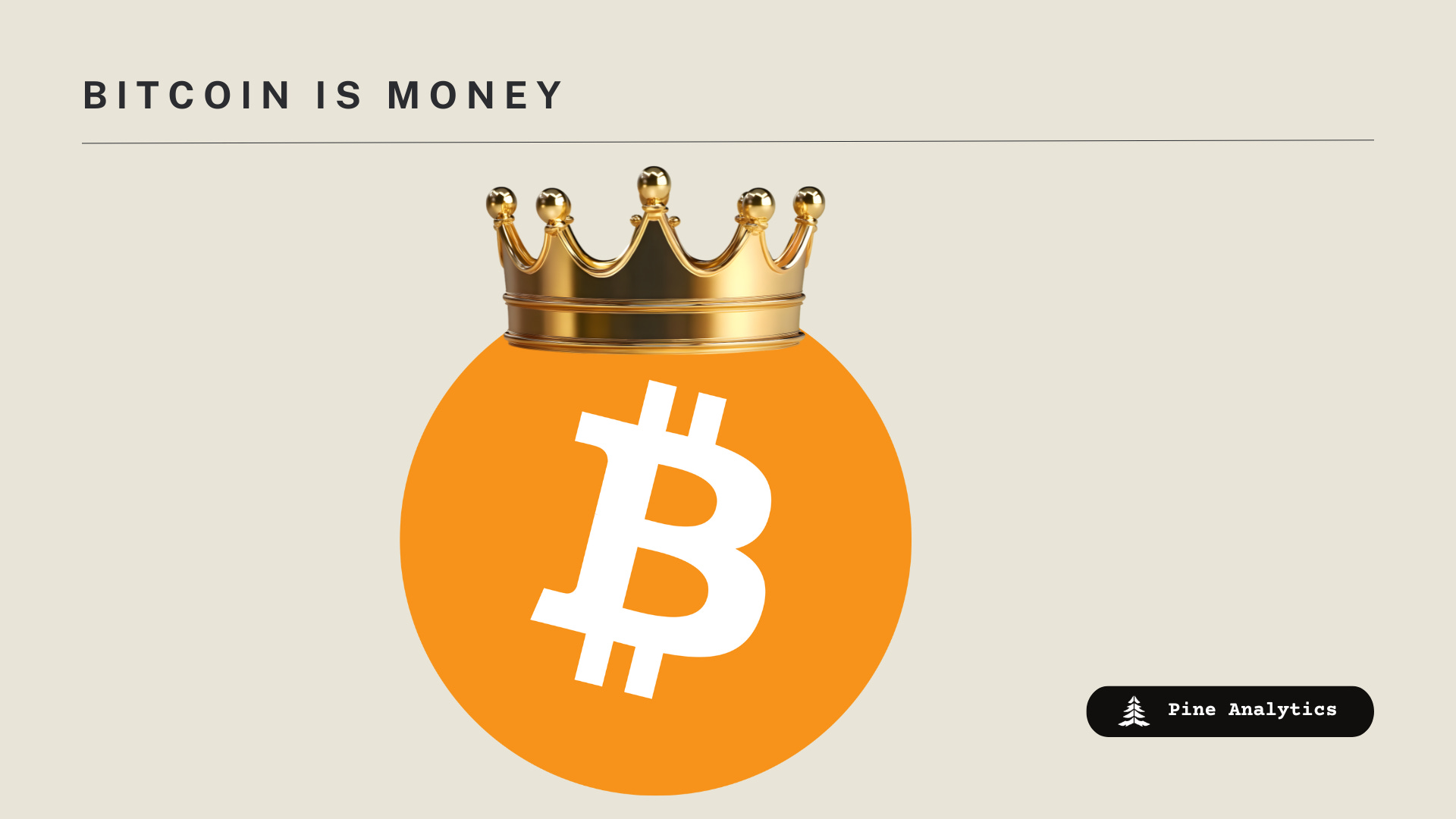
Bitcoin maintains its dominance over all other cryptocurrencies (excluding stablecoins, which derive moneyness from fiat pegs) for one reason: it is money. This status arises from a potent mix of first-mover advantage and path-dependent reinforcement. Each new ETF buyer, each day a whale holds, each nation that adds BTC to its reserves, Bitcoin’s moneyness strengthens. The network effect compounds relentlessly: deeper liquidity attracts larger allocators, which deepens liquidity further, which attracts sovereign buyers, which legitimizes the asset class, which brings the next wave of adoption. This flywheel cannot be replicated. It can only be joined.
Much of the altcoin market cap stems from coins being viewed as “silver to BTC’s gold,” but this framing fundamentally misunderstands monetary competition. Moneyness follows a Nash equilibrium: coordination games produce winner-take-most outcomes, and one asset emerges as the dominant store of value while others must trade on discounted cash flows or utility. History offers no examples of a “second-place money” maintaining durable value. Silver’s monetary premium eroded steadily after gold standardization, and the same fate awaits any crypto asset competing on the “store of value” dimension.
BTC achieved this status by pioneering a completely new asset class at a time when the USD was actively degrading its moneyness through inflation, unprecedented monetary expansion, and policy missteps (issues beyond this essay’s scope but deeply felt by the generation that came of age during the 2008 financial crisis). In essence, BTC is the best and first memecoin: a cultural and economic phenomenon whose value is self-reinforcing, backed by the most powerful force in markets, which is collective belief hardened into Schelling point. No other coin, regardless of technical features or ideological purity, can dethrone it. The window for monetary competition closed years ago. Privacy enhancements, while desirable, are better layered atop BTC (via protocols, L2s, or mixers) than attempted as a replacement. The latter strategy mistakes a feature for the foundation.
ZEC as a Route, Not a Destination
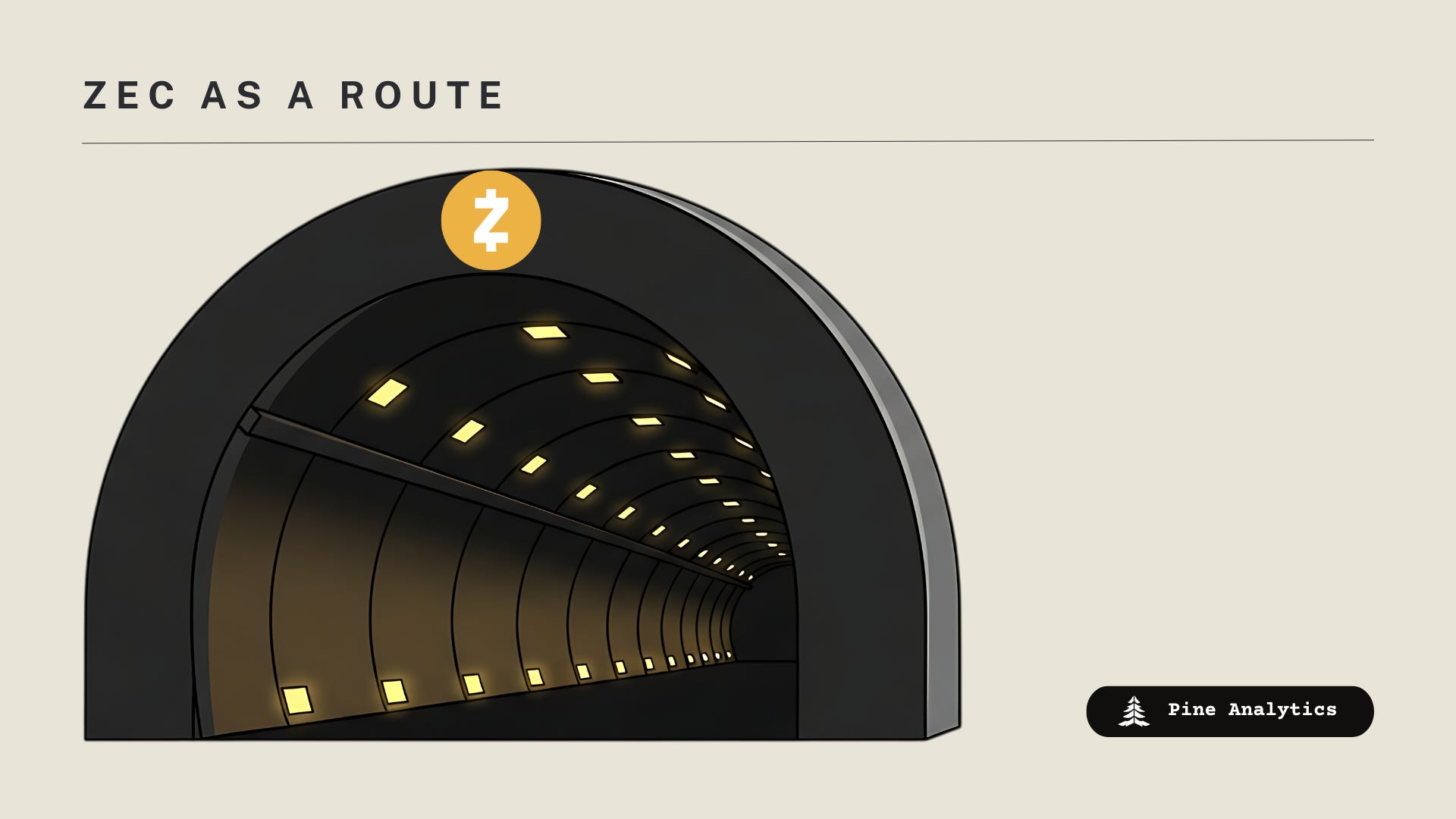
Where privacy coins like ZEC shine is in breaking the traceability of funds, whether for legitimate reasons like protecting activists, businesses, or personal finances, or even illicit ones (though I emphasize privacy’s inherent legitimacy). However, users treat ZEC as a route, not a destination. They acquire it, shield funds, and exit to BTC, stablecoins, or fiat.
The on-chain data tells this story clearly. Shielded supply has climbed dramatically in 2025, from roughly 11% of circulation at the start of the year to approximately 30% (around 5 million ZEC) by late 2025. At first glance, this seems bullish for the “ZEC as money” thesis. But dig deeper and the picture shifts. According to Coin Metrics, the surge in shielded transactions has been driven primarily by shielding and deshielding activity (moving value into or out of the privacy pool) rather than fully shielded z-to-z transfers. In other words, users are entering the pool, transacting, and exiting. They’re using ZEC as a privacy tunnel, not as a vault.
This flow-through dynamic is further evidenced by transparent-side metrics. Despite the 900%+ price rally, daily active wallets on the transparent chain have averaged only around 11,500, showing no corresponding surge in new participants. Monero, the other major privacy coin, has seen no parallel uptick in transaction counts (holding steady at 20,000-30,000 daily), suggesting ZEC’s move is not part of a broader privacy rotation but a Zcash-specific supply squeeze driven by coins moving into shielded pools and becoming illiquid on exchanges. CoinDesk Research noted that “traders are likely paying a significant premium” precisely because the visible network data cannot explain the price action.
For something to qualify as money, it must be the destination: the asset people want to accumulate and hold long-term, lowering their time preference by parking wealth in it. If ZEC is primarily a conduit, its demand is capped at the need for anonymizing funds at a single point in time, plus whatever speculative premium the market temporarily assigns. It cannot sustain exponential, reflexive growth like true money, where holding begets more holding, deeper liquidity, institutional treasuries, and cultural entrenchment. A tool that’s used and then discarded generates transactional volume, not compounding monetary premium.
There’s value in a large anonymity set (the bigger the pool, the harder to track) but ZEC holds no monopoly. Arkham Intelligence recently claimed to have labeled over 53% of ZEC transactions, linking $420 billion in volume to identifiable entities, demonstrating that even shielded transactions can be deanonymized through timing analysis, endpoint surveillance, and transparent entry/exit points. Competitors like Monero (where privacy is mandatory, not optional), emerging L2 solutions such as Aztec and Arcium, and even BTC mixers offer alternatives. Even if ZEC becomes the premier hub for anonymization, it won’t morph into money. Buyers chasing the “private BTC” hype risk a harsh reality check. ZEC’s price shouldn’t be mentally modeled against BTC unless it’s competing as money, which it’s too late for given BTC’s entrenched dominance.

Conclusion
Privacy is not a fad; it's a necessity that will define crypto in 2026 and beyond, as evidenced by surging adoption and narratives from institutions to retail. My family history fuels my advocacy for it, but we must view tokens like ZEC realistically: as powerful tools for sovereignty, not as money. BTC's path-dependent victory ensures no challenger can replicate its moneyness. Invest in privacy for its utility (shield, transact, exit) but don't confuse it with the monetary throne BTC occupies. Those who do may face a sobering hangover when the narrative shifts.